
Home » Dog Tooth Brushing
Brushing your dog’s teeth is a vital part of their dental care routine and can help prevent oral diseases. This is a detailed guide on how to brush your dog’s teeth properly.
Mastering the Art of Brushing Dogs Teeth’s
Step 1: Choose the Right Time
Start at a time when your dog is calm and relaxed. Ideally, choose a quiet place free from distractions. It’s often helpful to exercise your dog beforehand so they are more sedate.
Step 2: Gather Your Supplies
You will need a dog toothbrush, i.e. toothbrush designed for dogs or a finger brush, and canine toothpaste. Human toothpaste is not suitable for dogs as it contains ingredients that can be harmful if swallowed. Dog toothpaste often comes in flavours that are appealing to dogs, like poultry or beef, which can make the brushing process easier.
Step 3: Introduce the Toothpaste and Toothbrush
Before you start brushing, let your dog taste the toothpaste and get used to the dog toothbrush. Put a small amount of dog toothpaste on your finger and let your dog lick it off. This helps your dog get used to the texture and taste. Gently rub your finger along their gums and teeth. This step may need to be repeated over several days until your dog is comfortable.
Step 4: Acclimatize Your Dog to Mouth Handling
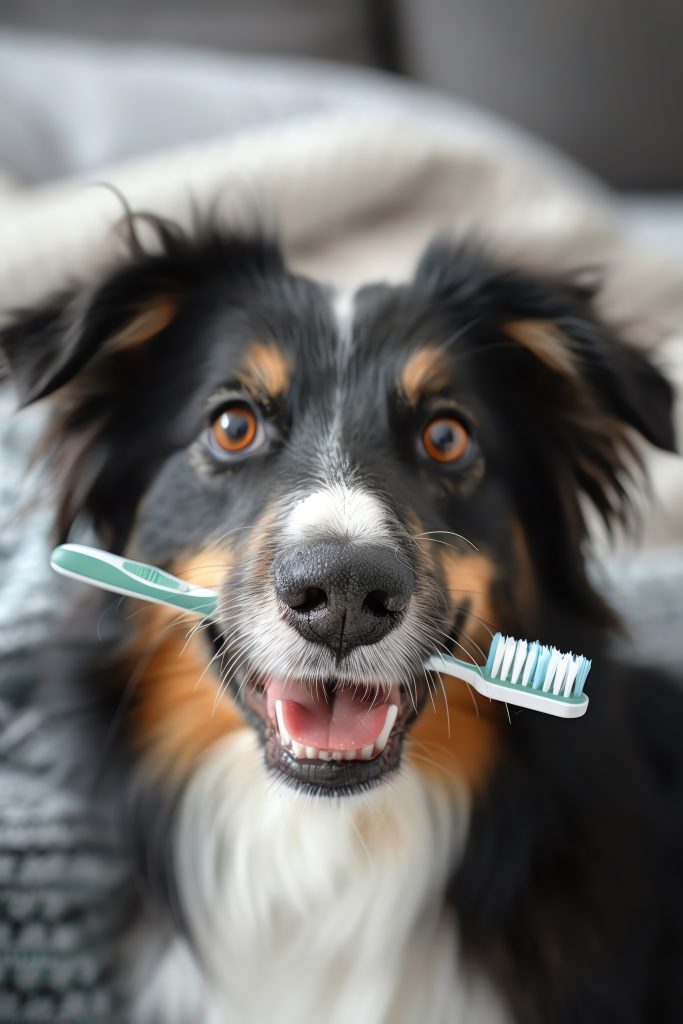
Touch and lift your dog’s lips to get them used to having their mouth handled. Praise them and give them a treat after you do this, so they associate the handling with something positive. If your dogs find this process stressful, as many do, then maxxicalm calming aid for dogs can be helpful while getting the dog accustomed to regular dental cleaning routine.
Step 5: Dog Brushing Technique
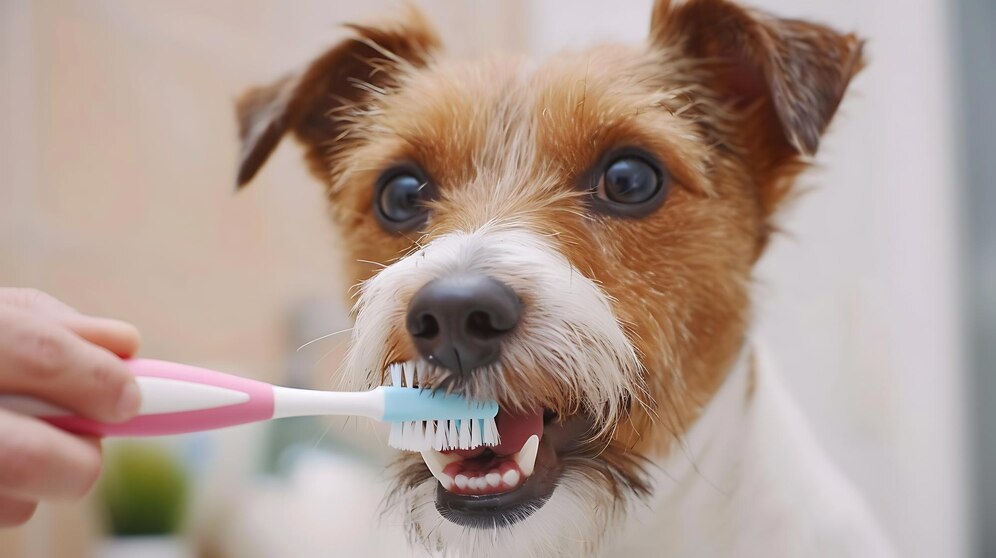
Once your dog is comfortable, it’s time to start brushing. Apply toothpaste to the toothbrush and lift your dog’s lips. Gently move the brush in a circular motion over the teeth and gums. Start with a few teeth at a time, working up to more each day. Focus on the outside surfaces of the teeth; these are the areas that tend to accumulate the most tartar. The inside surfaces are kept relatively clean by the dog’s tongue. Do not forget to brush the back upper molars and canines, as these teeth are prone to tartar build-up.
Step 6: Be Gentle
Use a soft touch to avoid gum damage. The bristles of the brush should be angled to reach under the gum line. You only need to apply slight pressure to remove plaque and bacteria.
Step 7: Praise and Reward
After brushing, always offer your dog a treat or extra attention. This will help your dog build a positive association with tooth brushing and make future sessions easier.

Step 8: Frequency
Ideally, you should brush your dog’s teeth daily, but if that’s not possible, aim for several times a week. The more often you brush, the better it is for your dog’s dental health.
Step 9: Watch for Issues
While brushing your dog’s teeth, keep an eye out for any signs of oral problems like redness, swelling, or bleeding gums, bad breath, or discomfort. If you notice any of these signs, contact your veterinarian.
Step 10: Consistency
Consistency is key to establishing a routine. Try to brush your dog’s teeth at the same time each day so it becomes a regular part of their schedule.
Remember, patience and consistency are vital. Some dogs may take longer to get used to the idea of teeth brushing than others, but with perseverance, most dogs can learn to tolerate and even enjoy dog brushing. Always make the experience as positive as possible and consult your veterinarian if you encounter any problems or if your dog shows signs of oral discomfort.
