The liver is one of the most important organs and it can have serious consequences if the liver is not working as it should.
The liver plays a vital role in digesting nutrients and detoxifying chemicals and is an essential part of the immune system. It is involved in building and breaking down fats, carbohydrates, and proteins. The liver also plays an important role in the production of red blood cells and is responsible for storing vitamins and minerals.
Basically…
Since the liver has so many important functions, it goes without saying that when the liver is not working properly, there can be serious health consequences. Canine liver disease is a broad term describing a number of liver diseases in dog. Chronic liver inflammation in dogs is also known as canine hepatitis or hepatitis in dogs.
Early diagnosis of canine liver disease is important, i.e. so the condition can be treated or at least managed.
Symptoms of liver diseases can be like symptoms of many other diseases and therefore are often missed in the beginning. These are considered the most common symptoms of liver disease in cats:
If you at any time suspect your cat may have liver disease you should see your Vet as soon as possible. Early diagnosis and treatment can mean all the difference for your cat.
The prognosis depends on the severity and length of time of liver pathology. For formal diagnosis, your Vet will take blood tests and most likely do an X-ray or ultrasound to get a better picture of what is going on in your cat’s liver.
Feline Liver Disease Blood Tests

It is recommended to run a CBC (complete blood count) and hepatic function panel (liver panel) on all pets showing symptoms of liver disease:
CBC is useful to check if the number of red blood cells present in the blood is lower than normal and for indications of infection
Hepatic function panel is a group of tests used to screen for, detect, evaluate and monitor acute and chronic liver inflammation (feline hepatitis), liver disease and / or liver damage.
High liver enzymes in cats do not automatically mean your cat has liver disease. The first step is to try to rule out any non-liver related diseases that may have caused the abnormal values.
For definitive diagnosis, the Vet is likely to take a biopsy, i.e. remove small tissue sample for testing.
The liver has amazing healing capacities so most feline liver disease can be successfully treated.
Unfortunately, some types of liver disease in cats are incurable, but with supportive care, the patient may still be able to live a comfortable, though shortened, life.

Supports your cat where and when they need it most
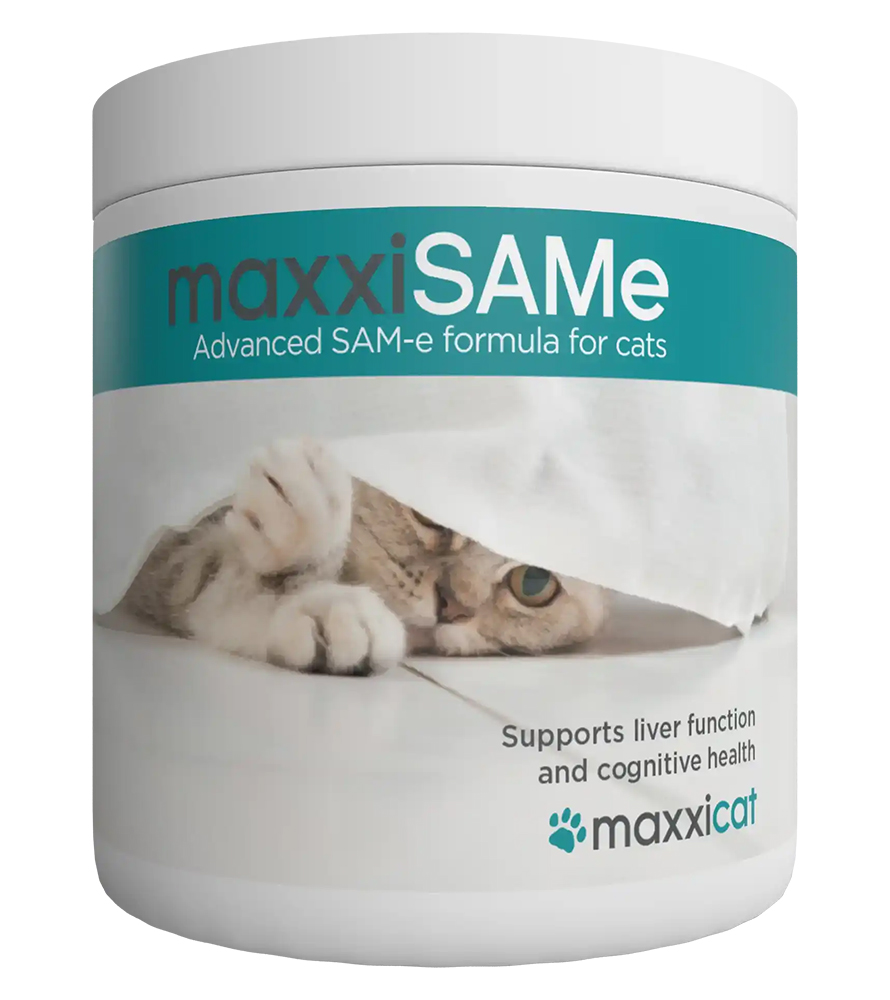
As cats grow older, they can face many of the same age-related health conditions as humans. Our unique stabilized SAM-e powder boosts liver and cognitive functions while easing joint discomfort and improves mood at the same time.
While maxxiSAMe is hard at work within your beloved cat’s liver and brain, expect marked improvements in attitude, energy, and the behavior of your cat.